Owning the History: A Search Console Retention Playbook for UK Analysts
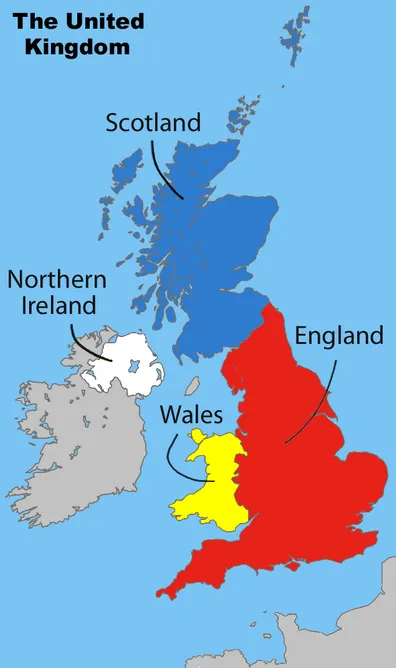
Photo: UK digital analyst reviewing Search Console data export spreadsheets on laptop in modern office, via s3.amazonaws.com
Search Console is often treated as a reporting interface rather than a record system. That assumption becomes expensive when a team needs to compare this quarter with the same quarter a year earlier, or when a page suddenly recovers after months of decline and nobody can prove what changed. The platform keeps a rolling window of performance data, and once a date falls outside that window it is gone from the interface. For UK search teams, the practical response is not to complain about the limit but to build a modest archive that outlives it.
Why the rolling window matters
Most search reporting is short-term by design. Teams look at the last 28 days, the last three months or the last six months. Those views are useful for operational triage, but they are weak for seasonality, long-tail behaviour and recovery analysis. A retailer comparing November with the previous November needs a like-for-like view. An agency auditing a client’s recovery after a migration needs a baseline that predates the incident. A publisher tracking long-tail queries needs to know whether a decline is a genuine loss of demand or simply a change in how queries are grouped.
Search Console’s retention period makes those questions time-sensitive. If the data is not exported before it rolls off, the team is left with anecdotal evidence and screenshots. The archive does not need to be elaborate. It needs to be regular, consistent and stored somewhere that analysts can query without wrestling with the interface.
A monthly snapshot routine
A monthly cadence is usually sufficient for trend and recovery work, provided the export is taken on a consistent date. Pick a day that is at least three days after month-end so that late-arriving data has settled. Record the export date, the date range covered and the property or properties included. Keep the raw files even if they are large; storage is cheaper than rework.
A practical routine is to export four tables: queries, pages, devices and countries. For each table, use a fixed 28-day or calendar-month window and filter to the property being tracked. If the property contains multiple subdomains or directories, export at the level that matches the reporting question. A single national property may be fine for a brand-level view, but a directory-level export is more useful for page-level recovery curves.
Do not overwrite previous exports. Store them in a folder structure that reflects year, month and property. A simple naming convention such as gsc_2026-10_pages_example.co.uk.csv is enough. The goal is reproducibility, not elegance.
A minimal data model
A warehouse does not need dozens of tables. A minimal model can start with one fact table and a small set of dimensions. The fact table should contain the date, property, query, page, device, country and the core metrics: clicks, impressions, CTR and average position. If query-level and page-level data are exported separately, keep them separate rather than forcing a join that the platform does not provide. The point is to preserve what Search Console reported, not to invent a unified dataset that never existed.
Add a snapshot metadata table with the export date, date range and any filters applied. This is the difference between an archive and a pile of CSV files. When an analyst six months later asks why a number changed, the metadata explains whether the change came from the site or from the reporting window.
For UK teams, country-level data deserves particular care. A property that serves the whole of the UK may still show meaningful differences between England, Scotland, Wales and Northern Ireland, especially for local service queries. Keeping country and region dimensions makes those differences visible without a separate reporting stack.
Three reports that need owned history
Once the archive exists, three reports become possible that the native interface cannot sustain.
Seasonally adjusted ranking trends
A raw average position chart is noisy because demand and competition change throughout the year. With at least two years of archived data, an analyst can compare a page’s position in the same month across years, or calculate a simple seasonal index for a query group. The output is not a perfect forecast, but it separates structural movement from recurring seasonal patterns. That distinction matters when a client asks whether a dip is a problem or simply the calendar.
Long-tail query survival
Long-tail queries are volatile. A query that generates a handful of impressions one month may disappear the next, not because the page lost relevance but because the query was grouped differently or demand shifted. Archived query-level exports allow a survival analysis: how many queries from a cohort remain active after three, six and twelve months? That metric is more useful than a single month’s query count because it shows whether the site is building durable demand or cycling through transient terms.
Page-level recovery curves
Recovery is rarely a single event. A page may regain impressions before clicks, or recover on mobile before desktop. With monthly page-level snapshots, a team can plot a recovery curve against a known intervention date and compare it with a control set of pages that were not changed. This is especially useful after a migration, a template update or a content consolidation. The archive provides the before-and-after evidence that a one-off dashboard screenshot cannot.
Governance and access
An archive is only useful if people can find it. Document the schema, the export routine and the known limitations. Assign an owner for the monthly snapshot and a backup. Review access permissions quarterly so that former staff or agency partners do not retain unnecessary access. If the data includes commercial queries or client properties, treat it with the same care as any other business record.
The archive does not need to be a major engineering project. A disciplined monthly export, a clear naming convention and a small metadata table will outperform an ambitious system that nobody maintains. The objective is modest but valuable: own the history before the window closes, so that the next year-on-year question has a factual answer rather than an estimate.